
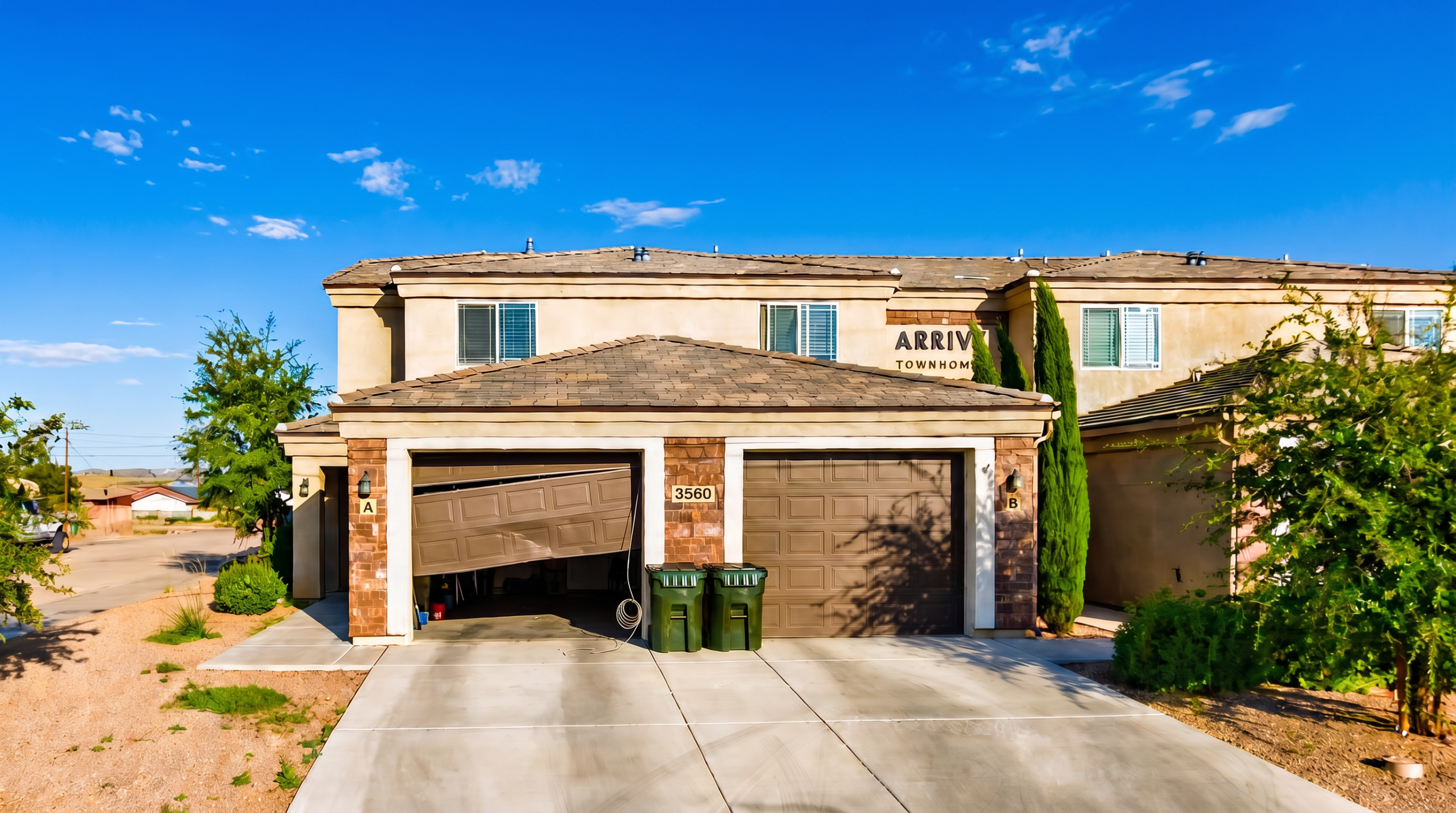
Choosing the Right Garage Door: A Surprisingly Emotional Journey
THE SHORT ANSWER: I know everything about garage doors and would love to talk to you about it, pick up your phone and call or text me!
Congratulations, you’ve decided to replace your garage door. Welcome to one of the most overlooked decisions in home ownership, a decision you will look at every single day for the next 20-plus years, more often than you’ll look at your own kitchen, and yet somehow you’re currently considering “just getting whatever’s cheapest at the hardware store.” Let’s slow down and do this right, because your garage door is basically the face of your house, and nobody wants a house with a bad face.
Here’s what actually matters, minus the fluff.
Material: Pick Your Fighter
Steel is the reliable, slightly boring friend who always shows up on time. It’s affordable, low-maintenance, comes in about a million styles, and won’t warp, crack, or rot. The tradeoff is it can dent if your teenager misjudges the basketball hoop angle again, and on its own it’s not a great insulator (more on that below). For 90% of homes, steel is the correct, drama-free answer, and there’s no shame in choosing the reliable friend.
Wood is gorgeous. Wood is also the friend who’s a lot of fun but requires constant emotional labor to maintain. Real wood doors need refinishing, sealing, and regular attention or they will warp, crack, and age about as gracefully as a banana left on the counter — especially out here where the sun treats untreated wood like a personal enemy. If you want the wood look without the wood lifestyle, composite or steel doors with faux wood finishes exist for exactly this reason.
Fiberglass is the “I don’t want to deal with any of this” option. It resists dents, doesn’t rust, and can be molded to look like wood without the upkeep. It’s a solid choice if you’re near the coast dealing with salt air, less critical here in the desert, but still a fine, low-fuss pick if you hate maintenance more than you love character.
Aluminum is light, rust-proof, and popular for those big glass-panel modern doors. It’s also the material most likely to look like it lost a fight with a soccer ball, since it dents easily. Great for looks, not great if your driveway doubles as a sports arena.
Style: What Is Your Garage Door Saying About You?
Your garage door takes up a genuinely absurd percentage of your home’s front-facing square footage, so pretending it doesn’t matter is like picking out a great outfit and then wearing a paper bag over your head.
- Traditional raised-panel – the khakis of garage doors. Goes with everything, offends no one, resale agents love it.
- Carriage house style – for when you want your garage to imply you also have a horse.
- Modern/full-view glass – sleek, dramatic, lets everyone see exactly how organized (or not) your garage is. Commit accordingly.
- Contemporary flush panel – clean, minimal, the door equivalent of a minimalist Instagram aesthetic account.
The real trick: match the door style to your house’s actual architecture, not to whatever looked cool on Pinterest at 11pm. A carriage-house door on a stucco desert ranch house is going to look like it wandered in from the wrong neighborhood.
Insulation: The One Nobody Thinks About Until August
Here’s a fun fact for anyone living somewhere the sidewalk can fry an egg for half the year: an uninsulated garage door turns your garage into a convection oven, which then shares that heat with anything on the other side of that shared wall, including, often, your actual living space. If your garage is attached, a poorly insulated door isn’t just a garage problem, it’s an AC-bill problem.
R-value is the number that tells you how well a door resists heat transfer, and it ranges from “basically a screen door” to “keeps your milk cold.” Look for:
- Single-layer, non-insulated – cheapest option, and it shows, especially on your energy bill.
- Double-layer with polystyrene – decent insulation, budget-friendly middle ground.
- Triple-layer with polyurethane – the good stuff. Better R-value, quieter operation, and it actually holds up structurally better too.
If your garage is attached to the house, insulation isn’t a luxury upgrade, it’s the difference between a comfortable house and a house where one room is mysteriously always ten degrees off from the rest.
The Stuff Nobody Puts in the Brochure
- Windows: Great for natural light and curb appeal. Also great for anyone casually browsing what’s in your garage from the street. Frosted or tinted inserts exist for a reason.
- Hardware: Decorative handles and hinges are 100% for looks and 0% functional on most modern doors, and they’re also the cheapest, fastest way to make a plain door look expensive.
- Opener compatibility: A gorgeous door paired with a screeching 20-year-old chain-drive opener is like putting a spoiler on a minivan. Consider whether your opener deserves the upgrade too.
- Wind rating: If you’re anywhere that gets serious wind gusts, check the door’s wind-load rating. Nobody wants their garage door doing an impression of a sail.
- Resale value: Garage door replacement consistently ranks near the top of “home improvements that actually pay you back” lists. Whoever buys your house eventually will judge it, silently, from the driveway.
The Bottom Line
Your garage door isn’t just a big rectangle that keeps your stuff dry, it’s structural, it’s insulation, it’s curb appeal, and it’s on display 24/7 whether you think about it or not. Take the twenty extra minutes to actually pick the right material, style, and insulation level instead of defaulting to “whatever’s in stock,” and future-you (and future-you’s energy bill) will be grateful.
If you want an actual human opinion on what makes sense for your specific house instead of a wall of options, that’s what I’m here for, happy to walk through it with you, no pressure, no upsell theater.